- Have any questions?
- +256 750 878872
- info@paidhafm.com


WEST NILE’S LOCALLY OWNED BUS COMPANIES FACE UNCERTAIN FUTURE

GULLY EROSION THREATENS PAIDHA CENTRAL MARKET
September 28, 2026
ARUA REGIONAL REFERRAL HOSPITAL CLEARED TO RECRUIT 127 HEALTH WORKERS
September 28, 2026WEST NILE’S LOCALLY OWNED BUS COMPANIES FACE UNCERTAIN FUTURE
By: Our Reporter
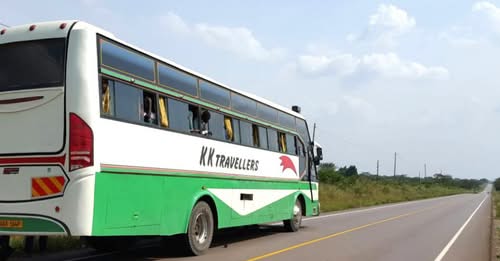
Hopes of reviving and sustaining locally owned bus companies in West Nile are fading, raising concern among business leaders and residents over the future of a transport sector that has played a significant role in the region’s economy.
The concern follows the latest suspension of operations by Zawadi Bus Services, coming after the collapse of Gaagaa Bus Services and KK Traveller.
The developments have renewed concerns that West Nile could lose passenger transport companies that were once a source of regional pride and an important channel for keeping money within the local economy.
Business leaders say the companies contributed to the region’s economy beyond providing passenger transport.
For decades, they supported livelihoods, created employment and facilitated the movement of people and goods between West Nile, Kampala, South Sudan and the Democratic Republic of Congo.
Moses Akuma Odims, the Executive Director of the West Nile Development Association (WENDA), a regional body that coordinates development efforts among local governments in West Nile, says the economic contribution of the bus companies extended beyond their owners.
Akuma says profits generated by Gaagaa Bus Services helped families in Maracha meet household needs, including school fees, while salaries earned by employees of KK Travellers enabled families in Yumbe to improve their homes.
He says the companies also provided employment for drivers, conductors, mechanics, cleaners and ticket agents.
Akuma says the collapse of the three companies has weakened a transport network that was central to West Nile’s connectivity and economic activity.
He argues that West Nile’s strategic position as a major trading corridor linking Uganda with South Sudan and the Democratic Republic of Congo makes reliable passenger and cargo transport essential to the region’s economy.
Fadhil Lemeriga, a long-time beneficiary of Gaagaa and KK Travellers services, says the closure of the companies has affected workers and families that depended on the businesses for their livelihoods.
He says the decline of locally owned bus companies has also contributed to higher transport costs and weakened the sense of business pride that had developed around West Nile-owned enterprises.
Lemeriga is calling on the government to consider supporting local transport cooperatives through affordable financing to help revive the sector.
Meanwhile, Moses Obeta, the Chairperson of the Arua Business Community, says government support for locally owned businesses in West Nile remains inadequate.
Obeta says local businesses face significant financial pressures, including what he describes as a heavy tax burden, which he argues makes it difficult for them to survive and expand.
He is calling for a review of government support and taxation measures to create an environment that enables local businesses to grow and contribute more to the regional and national economy.
Some political leaders in West Nile attribute the collapse of locally owned bus companies to the increasingly difficult operating environment in Uganda’s transport sector rather than a lack of business capacity among local investors.
They cite high interest rates on loans, rising fuel prices, taxes on spare parts, poor roads that increase vehicle maintenance costs and the lack of financial protection when buses remain grounded for extened periods.
The leaders are calling for the establishment of a transparent and professionally managed transport investment company that could be owned by residents of West Nile.
They argue that such an initiative could help mobilise local capital, create employment and strengthen the region’s passenger transport network.