- Have any questions?
- +256 750 878872
- info@paidhafm.com


LIGHTNING KILLS FISHERMAN, INJURES ANOTHER IN PAKWACH

PADEA PRIMARY SCHOOL SUPPORTS GIRLS’ MENSTRUAL HEALTH
October 8, 2026LIGHTNING KILLS FISHERMAN, INJURES ANOTHER IN PAKWACH
By : Rose Kasigwa and Jawok Alfred
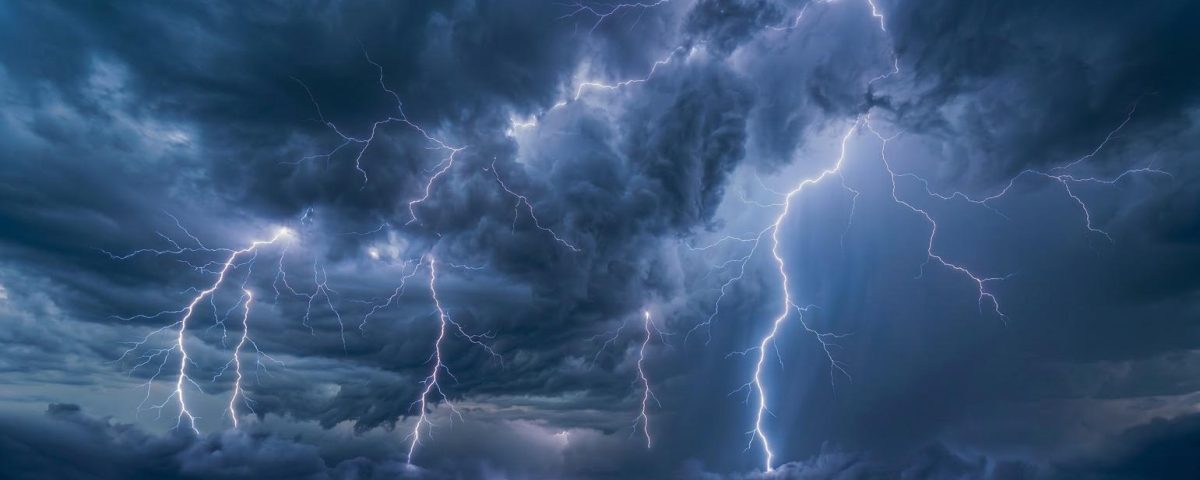
A 45-year-old fisherman, Denis Nyolonga, has been killed by lightning while fishing on the River Nile at Kuba Landing Site in Mukale Parish, Pakwach Sub-county, Pakwach District.
Another fisherman, 23-year-old Saviour Opakmungu, was critically injured in the incident, which occurred at about 10 p.m. on Wednesday, October 7, 2026, during a heavy downpour accompanied by thunderstorms.
According to Kuba Village LC1 Chairperson, Godfrey Odaga, the two fishermen were in a small canoe on the River Nile waters near Mugobe Landing Site when the heavy rain started.
Opakmungu said they attempted to paddle back to the shore, but lightning struck the boat. He said the thunder was extremely loud and Nyolonga died instantly, while he sustained serious injuries.
Berucn Olamgiu Gavin, a resident of Kuba Village, said fishermen at the landing site rushed to rescue the victims but found Nyolonga already dead. He appealed to the government to support the bereaved family.
Pakwach Sub-county Chairperson Alfred Jawoko said police visited the scene and the deceased’s body was taken to Pakwach Health Centre IV. He commended residents for responding quickly to the incident.
Pakwach District Police Commander, SP Julius Baganzi, confirmed the incident and advised fishermen to avoid going onto the water during thunderstorms.
Nyolonga is survived by his wife and five children.
Other Lightning Incidents in Pakwach
The latest incident comes amid several reported lightning incidents in Pakwach District in recent years.
On September 28, 2026, ten female students of Panyango Secondary School were affected when lightning struck their dormitory at about 10 p.m.
The students were initially taken to Pakia Health Centre II in Panyango Sub-county for first aid before being transferred to Pakwach Health Centre IV for further treatment.
The school’s Director of Studies, Collins Kumakech, said the incident occurred in a newly constructed girls’ dormitory. Eight students were directly struck by lightning, while two others collapsed from shock, bringing the total number of affected students to ten.
Pakwach District Senior Probation and Welfare Officer, Cleration Acelle, called on schools and other public institutions to install adequate lightning arresters to reduce the risk of such incidents.
Local reports also indicate that lightning killed three pupils in Wadelai and two fishermen in Panyigoro last year.
Lightning Is a Natural Phenomenon, Not Witchcraft
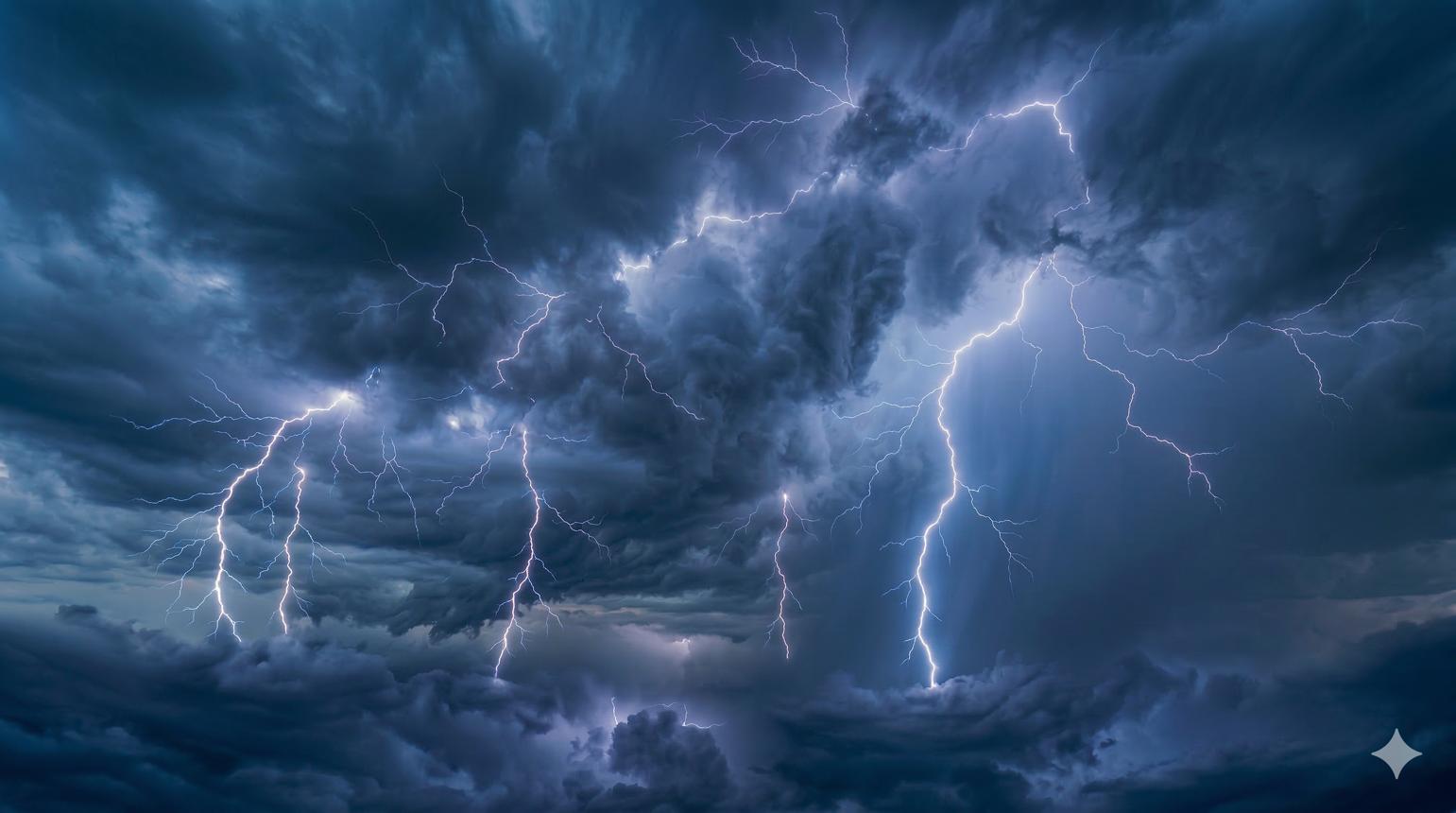
Experts say lightning is a natural atmospheric phenomenon caused by the movement and accumulation of electrical charges during thunderstorms, and there is no scientific evidence linking lightning strikes to witchcraft, curses or other supernatural forces.
Dr. Ken Nixon, an Associate Professor in the School of Electrical and Information Engineering at the University of the Witwatersrand in Johannesburg, explained during a two-day training for journalists in Kampala that lightning occurs when electrical charges accumulate inside storm clouds.
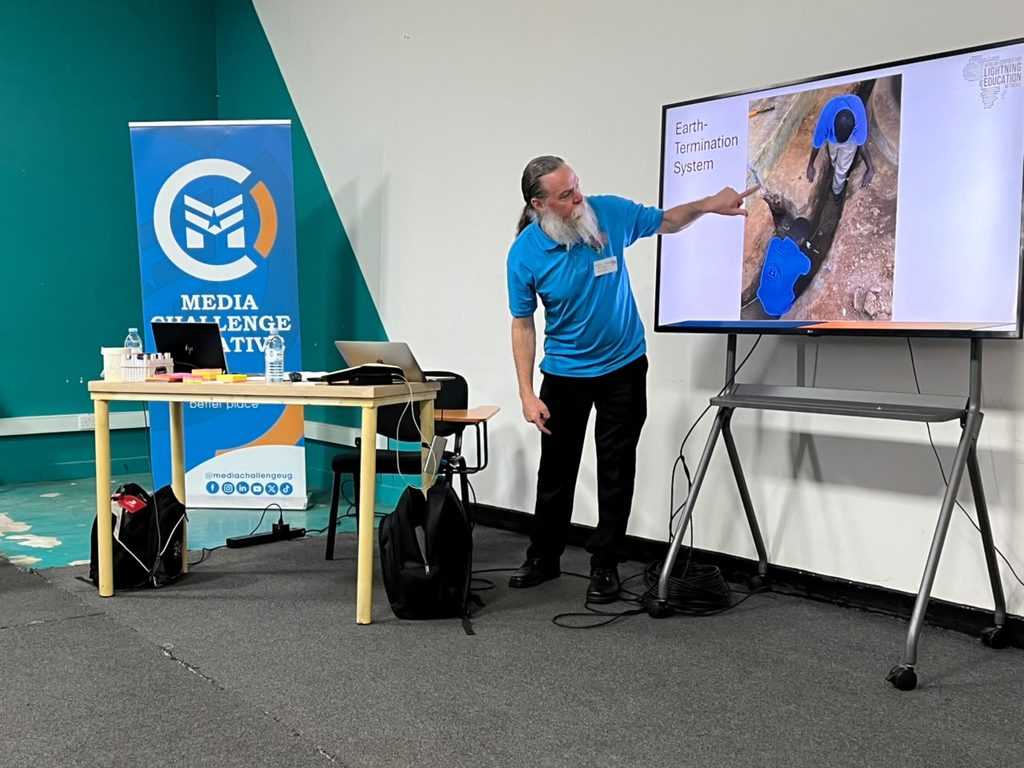
Prof. Nixon explains to Journalists the proper installation of lightening system
He said strong winds cause ice particles, water droplets and hail to collide within clouds, separating positive and negative charges. When the difference between the charges becomes sufficiently large, an electrical discharge occurs through the atmosphere, producing the bright flash known as lightning.
According to Prof. Nixon, lightning can occur within a cloud or between clouds and the ground. It can strike people, buildings, trees and other objects as electricity moves between areas with different electrical charges.
He said tall or isolated objects, as well as people in open areas, can be particularly vulnerable during thunderstorms.
Prof.Nixon also explained that a person does not necessarily have to be struck directly to suffer injuries. Electricity can spread through the ground, jump from a nearby object or travel through electrical wiring and other conductive materials.
Experts further say the intense heat generated by lightning causes surrounding air to expand rapidly, creating the sound wave heard as thunder. Lightning is seen before thunder because light travels much faster than sound.
Survivors Can Suffer Long-Term Effects
Dr. Mary Ann Cooper, Managing Director of the African Centre for Lightning and Electromagnetics Network (ACLENet) and an emergency physician with about 40 years of experience in injury prevention and the treatment of lightning and electrical injury survivors, said lightning survivors can experience long-term physical, neurological and psychological effects.
Speaking during the two-day journalists’ training held in Kampala on October 1 and 2, Dr.Cooper said understanding lightning as a natural atmospheric phenomenon is important for improving public awareness and reducing preventable deaths and injuries.
She said lightning can affect the nervous system even when a survivor has no obvious external injuries. Some survivors may develop persistent headaches, memory problems, difficulty concentrating, dizziness, fatigue and balance problems.
Dr.Cooper said lightning can also damage nerves and muscles, resulting in chronic pain. Other survivors may experience hearing problems, including ringing in the ears or hearing loss, as well as vision problems and eye injuries, she explained.
She added that some survivors may experience anxiety, depression, sleep difficulties, irritability, social withdrawal or changes in personality. These effects can interfere with their ability to return to school, work and normal daily activities.
Experts Urge Communities to Take Precautions
Dr.Cooper urged people to seek shelter inside safe, enclosed buildings whenever thunderstorms approach and to avoid open fields, isolated trees and water bodies.
She also called on schools, health facilities and other public institutions to install and properly maintain lightning protection systems.
Experts further say that while lightning cannot be completely prevented, deaths and injuries can be reduced through proper protection systems and appropriate safety measures.
Fishermen and other people working on rivers and lakes are advised to leave the water when thunderstorms develop and seek safe shelter. People should also avoid standing under isolated trees, in open areas or near other tall structures during storms.
Schools are encouraged to develop emergency plans, train teachers and pupils on lightning safety and suspend outdoor activities such as sports and assemblies when thunderstorms are approaching.
Authorities and communities are also encouraged to follow weather forecasts and warnings from the Uganda National Meteorological Authority and take early action whenever severe thunderstorms are expected.