- Have any questions?
- +256 750 878872
- info@paidhafm.com


KING OYO: FROM THREE-YEAR-OLD BOY KING TO THE END OF A 31-YEAR REIGN

PRESIDENT MUSEVENI COMMENDS AMERICAN EVANGELIST FOR SUPPORTING REFUGEES IN UGANDA
August 27, 2026
ANJAT STREAM REHABILITATION SET TO EASE WATER SHORTAGE IN PAIDHA
August 31, 2026KING OYO: FROM THREE-YEAR-OLD BOY KING TO THE END OF A 31-YEAR REIGN
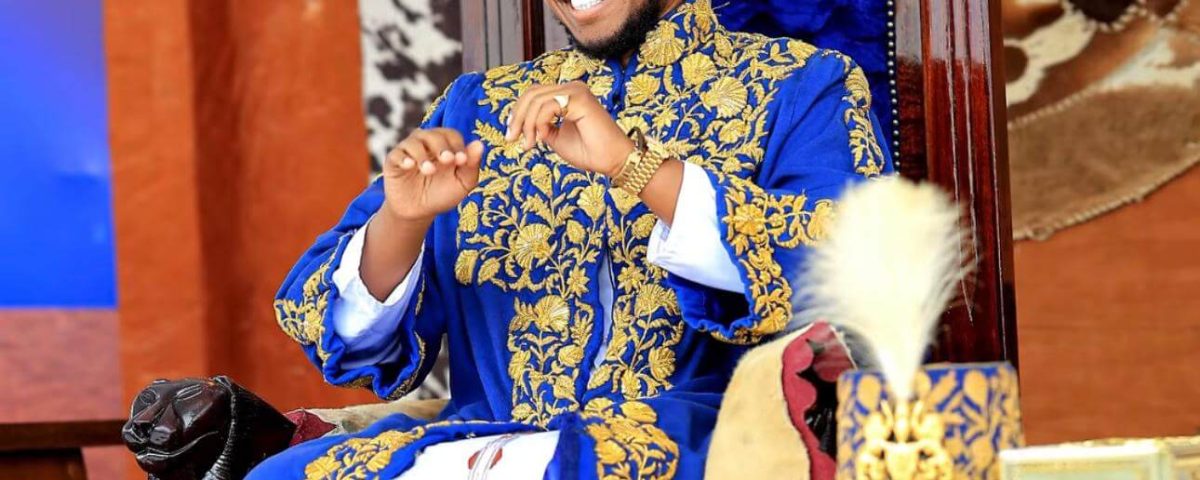
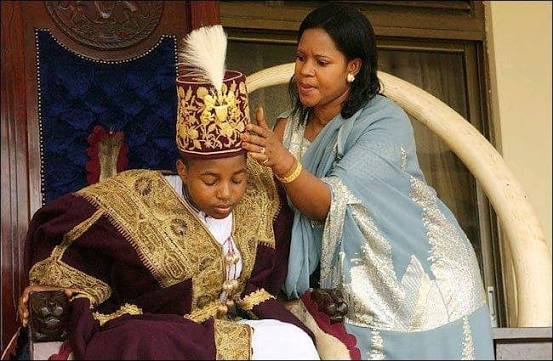
King Oyo and the queen mother, Best Kemigisa Olimi Akiiki.
By : News Editor
The Tooro Kingdom has lost a monarch whose life was intertwined with the history of the institution he inherited as a small child.
Omukama Oyo Nyimba Kabamba Iguru Rukidi IV died on Thursday night, August 27, 2026, at the age of 34, bringing to an end a reign that began when he was only three years old.
The Tooro Kingdom Prime Minister, Calvin Armstrong Rwomiire Akiiki, confirmed that the King died at about 10 p.m., describing his death as a major loss to the royal family, the people of Tooro and Uganda.
His death came on the same day the Kingdom had appealed to the public to pray for the monarch after confirming that he was in critical condition and receiving medical attention in the United States. The Kingdom had earlier urged the public to ignore reports circulating on social media about his death until an official communication was issued.
A throne inherited in childhood
King Oyo’s story was unusual from the beginning.
Born on April 16, 1992, to Omukama Patrick David Matthew Kaboyo Olimi III and Queen Mother Best Kemigisa, Oyo was thrust into the centre of Tooro’s royal institution after the death of his father in August 1995.
He was just three years old when he became Omukama of Tooro on September 12, 1995.
That made him internationally known as the world’s youngest reigning monarch at the time. But behind the remarkable headline was a child growing up under the responsibility and expectations of a traditional institution with deep roots in western Uganda.
Because of his young age, the affairs of the Kingdom were initially handled through regents. Oyo’s childhood therefore became an unusual period in Tooro’s history, as the young monarch gradually grew from a ceremonial royal figure into an adult expected to take greater responsibility for the Kingdom.
The young king grows into his crown
A major turning point came in April 2010, when Oyo turned 18.
His 18th birthday was marked in Fort Portal with ceremonies through which he formally assumed the full responsibilities of the Omukama.
It was an important moment because the young king who had spent much of his childhood under the guidance of regents was now taking direct responsibility for the institution he had inherited years earlier.
From then on, Oyo increasingly presented a different image of traditional leadership — one associated with a younger generation while remaining rooted in Tooro culture and royal traditions.
His public life included participation in activities connected to youth, education, culture, and tourism and community development. He also became a familiar figure beyond Tooro, attracting attention whenever Uganda’s traditional institutions were represented at major national and international occasions.
A reign that lasted nearly three decades
King Oyo remained on the throne for almost 31 years.
His reign began at a time when Uganda’s traditional institutions had only recently been restored as cultural institutions after being abolished in 1967.
The restoration of cultural institutions in 1993 created a new environment for traditional leaders, whose roles were no longer political but centred largely on culture, heritage, identity and social development.
Oyo therefore grew into kingship during a period when Uganda’s monarchies were rebuilding their place in society.
For Tooro, his reign became part of that process.
Although the Omukama does not exercise executive political authority over Uganda, the institution carries considerable cultural importance among the Batooro and other communities connected to the Kingdom.
The final hours
The circumstances surrounding King Oyo’s illness and death remain limited in the public domain.
The Kingdom confirmed on Thursday that the monarch was critically ill and receiving medical care in the United States. He later died at approximately 10 p.m.
The Kingdom has not publicly provided a detailed medical explanation for his death. Reports and speculation about specific illnesses have circulated, but without an official medical statement, those claims should not be treated as established fact.
His death has since triggered mourning across Tooro and messages of condolence from Uganda’s other traditional institutions and political leaders.
What happens to the Tooro throne?
Even as Tooro mourns, the question of succession is already emerging.
The Kingdom’s Prime Minister has said that King Oyo left behind a Prince who is expected to succeed him.
However, the identity of the heir has not yet been publicly revealed. Kingdom officials say the announcement will be made at the appropriate time and in accordance with Tooro customs and traditions.
The royal family has also begun consultations following the King’s death, with members expected to participate in discussions concerning the next stage for the Kingdom.
Meanwhile, Tooro has entered a period of mourning. Kingdom officials have announced nine days of mourning, with subjects gathering at the Muchwa Kingdom complex in Fort Portal to pay their respects.
The legacy of a king who started as a child
King Oyo’s greatest historical distinction may be the extraordinary circumstances under which he became king.
He did not choose kingship. It came to him when he was three.
For the next three decades, his name remained inseparable from Tooro — first as the child monarch who attracted worldwide attention, and later as an adult king navigating the responsibilities of a traditional institution in modern Uganda.
His death at 34 closes one of the most unusual chapters in Uganda’s contemporary royal history.But it also opens another.
The Tooro Kingdom must now mourn a king who spent almost his entire life as its monarch while preparing for the transition to a new generation of royal leadership. For the people of Tooro, the memories of King Oyo will not only be about the boy who became king at three. They will also be about the young man who grew up under the crown and spent nearly three decades carrying one of Uganda’s most prominent cultural institutions into the modern era